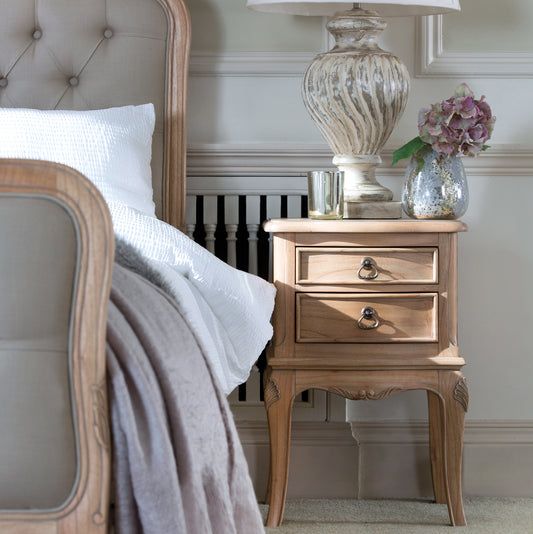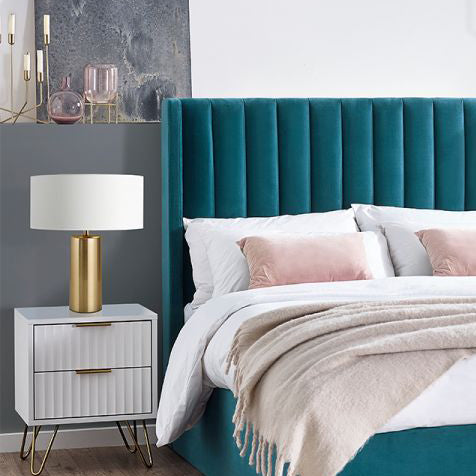

A bedside table sees more nightly use than almost any other piece of bedroom furniture, which makes drawer count and build quality matter as much as how it looks in a photo. Our bedside tables range covers 2 and 3 drawer configurations in oak, French sleigh detailing, and weathered finishes, so the choice comes down to genuine storage needs rather than style alone.
A 2 drawer bedside table suits most standard needs, giving enough separated storage for everyday items like glasses, chargers, or reading material without needing more capacity than a bedside table typically requires. This configuration works well as a matched pair either side of a bed, since two drawers is enough to keep the surface clear without the piece becoming bulkier than a bedside table needs to be. Bedroom bedside tables in this format tend to be the most versatile choice across different room sizes and styles.
Bedside tables 3 drawer designs give noticeably more storage than a 2 drawer equivalent, useful if you genuinely need more than the basics within reach overnight. 3 drawer bedside tables tend to work best in a larger bedroom where the slightly bigger footprint doesn't feel cramped against the bed, since the extra drawer usually means more height or depth rather than just more compartments. A 3 drawer bedside table suits anyone using the space for more than the essentials, such as medication, books, or personal items that benefit from being properly organised rather than piled together.
Oak bedside tables bring visible grain and a warmer tone into a bedroom, suiting a room already built around natural wood accents rather than painted furniture. An oak bedside table in this range holds up well to years of nightly use, since solid wood construction generally outlasts lighter composite alternatives under the same daily wear. Oak bedside drawers specifically benefit from this durability, since drawer runners see more repeated use than almost any other moving part in bedroom furniture.
Not every bedroom needs a large bedside surface, but if you regularly use the space for a lamp, a glass of water, and a book all at once, a more generous top surface makes a genuine difference to everyday usability. Measuring what you actually place on a bedside table nightly, rather than guessing, helps avoid choosing a piece too small to hold everything comfortably, or unnecessarily large for a room with limited space beside the bed.
Bedside drawers should sit at a height reasonably close to your mattress top, so reaching for items doesn't mean leaning down awkwardly or reaching up too far. Bedside tables paired with a taller bed frame may need a correspondingly taller table to keep this relationship comfortable, so check your bed's mattress height against a table's overall height before ordering rather than assuming standard proportions will work for every frame.
Away from oak, this range also covers French sleigh-detailed bedside tables with carved framing, and weathered finishes that bring a softer, more lived-in character to the wood surface. A French sleigh design tends to suit a bedroom already built around a matching bed frame with similar detailing, while a weathered finish works well in a room leaning toward a more relaxed, country-style scheme. Rattan effect and matt painted options round out the range further, giving lighter, more contemporary alternatives for bedrooms that lean away from a heavier wood-led look.
Regular dusting keeps most finishes looking sharp, though it's worth avoiding damp cloths directly on oak or weathered wood surfaces, since excess moisture can affect the finish over time. Drawer runners on any bedside table benefit from occasional light cleaning to prevent dust buildup that can eventually make drawers stick or run less smoothly, particularly on pieces that see genuinely daily use rather than occasional opening.
Generally yes, since the extra drawer typically adds height rather than depth, so check the overall dimensions against your bed frame height before assuming it will sit at a comfortable level.
Oak tone can vary between pieces and finishes, so ordering a sample or checking product photos carefully against your existing furniture helps avoid an obvious mismatch once it arrives.
Measure the gap between your bed frame and the nearest wall or door swing, and compare it against the table's full width and depth, not just the height, before ordering.
Yes, provided the top surface is large enough for both, though it's worth checking the surface dimensions specifically if you're planning to fit a lamp alongside other regular items.
They don't need to match exactly, though most people prefer a coordinated look, so choosing complementary rather than identical designs works well if you want some variation either side of the bed.