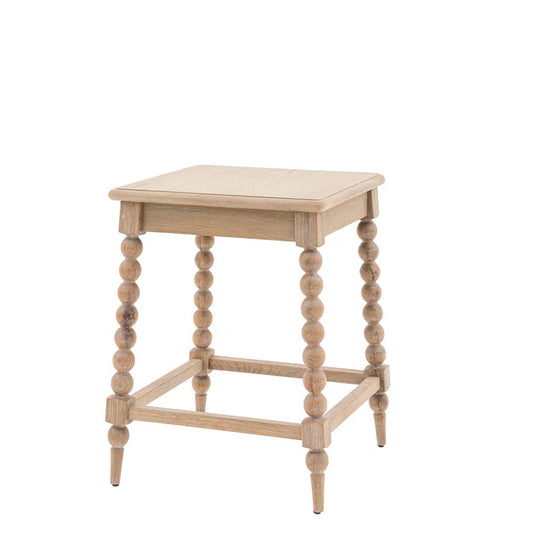

A side table has one main job: sitting exactly where you need a surface without eating up floor space you don't have to spare. Our side tables range covers drum and pedestal shapes, oak and gold finishes, and a marble-effect design for a touch of statement styling, so there's a fit whether the table needs to disappear into the room or genuinely stand out.
A round side table softens a room built around straight-edged furniture, since there are no corners to catch on a walkway or bump into when moving past. Round side tables in this range include drum-shaped designs with a solid cylindrical base as well as slimmer pedestal styles, so the roundness itself doesn't mean every design looks the same. Round side tables for living room use tend to work particularly well beside an armchair or at the end of a sofa where a straight-edged table would otherwise jut into the walking space.
An oak side table brings natural grain and warmth into a room, suiting spaces already built around wood tones rather than painted furniture. Oak side tables for living room settings tend to pair well with existing wood flooring or a wood-framed sofa, keeping the material palette consistent rather than introducing a clashing tone. A round wood side table combines the softer round shape with this warmer material, giving a design that reads as approachable rather than formal, which suits a lived-in family room more than a strictly formal reception space.
A gold side table works as a genuine accent piece, catching light in a way that wood or painted finishes simply can't. This makes gold side tables particularly effective paired with a plainer sofa or a neutral colour scheme, where the table itself becomes the point of visual interest in the room rather than blending into a busier backdrop. A lamp table finished in gold pulls double duty, since the reflective base and the lamp above it reinforce each other rather than competing for attention.
A marble side table in this range uses a marble-effect surface rather than genuine stone, giving the visual richness of marble at a different weight and price point than a solid stone top. A marble top side table or side table with marble detailing suits a room where you want that polished, high-end look without the extra weight a genuine stone surface would add, particularly useful if the table needs to be moved around the room occasionally rather than staying fixed in one spot.
A sofa side table needs to sit at a height that's genuinely useful, roughly level with your sofa arm, so drinks and everyday items are easy to reach without leaning up or down awkwardly. Side tables for living room use generally work best positioned close enough to touch from a seated position, rather than set back for purely visual balance, since a side table that's admired but never actually used isn't doing its job. Living room side tables also benefit from matching height rather than matching material exactly, so a table can differ in finish from your sofa while still looking intentional in the space.
A small round side table suits a tighter gap beside an armchair or a narrower sofa end, where a larger table would crowd the space more than it helps. A modern side table with cleaner lines tends to suit a room already leaning contemporary, while a more detailed design fits better alongside classic or period furniture. Whatever the style, measure the actual gap available before choosing a size, since a table that looks proportionate in a product photo can still overwhelm a genuinely tight space.
A side table living room setup doesn't need every piece to match exactly. Pairing a wooden side table with a gold coffee table, or a marble-effect design alongside oak shelving, tends to look more considered than forcing every surface into the same finish. The key is repeating at least one material or tone somewhere else in the room, whether that's a picture frame, a lamp base, or another small accent, so the side table feels chosen rather than randomly placed.
It's generally lighter and less prone to chipping at the edges than solid stone, though it should still be wiped rather than scrubbed to keep the surface finish looking sharp.
Measure the gap between your sofa arm and the nearest walking path, then check the table's diameter against that space rather than just its listed height.
The finish is designed to hold up under normal indoor conditions, though it should be dusted rather than cleaned with abrasive products to avoid dulling the surface.
Yes, the material and finish work equally well in a bedroom as a bedside surface, particularly if the room already features other oak or natural wood furniture.
Aim for the table top to sit roughly level with your sofa arm, since a table noticeably taller or shorter can make everyday items harder to reach comfortably.