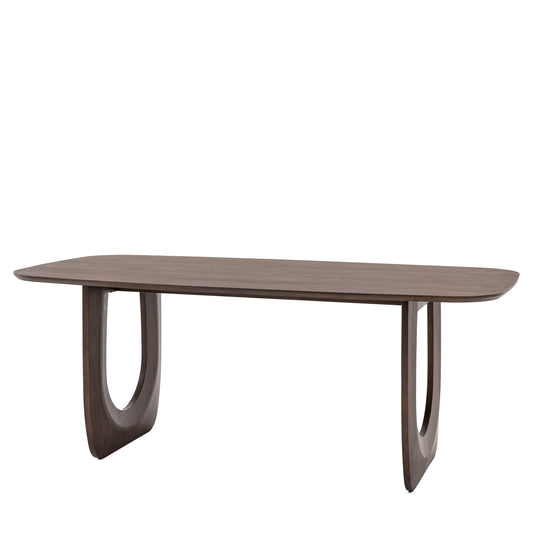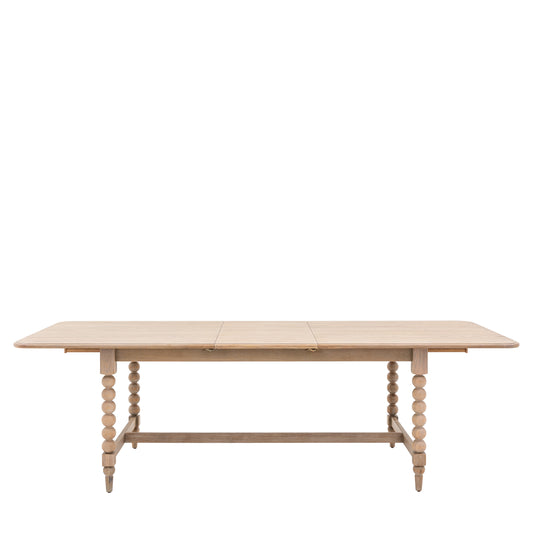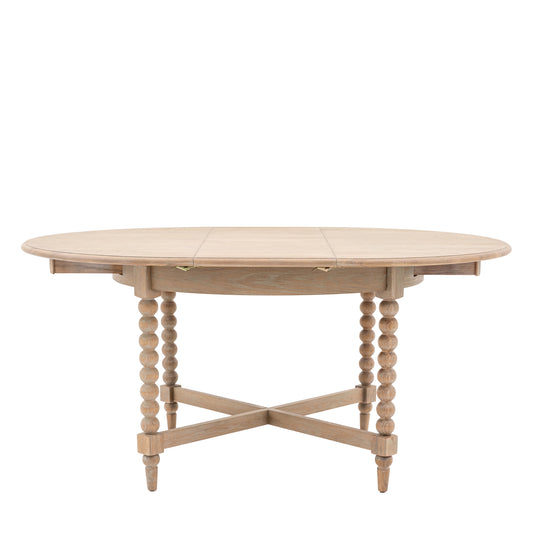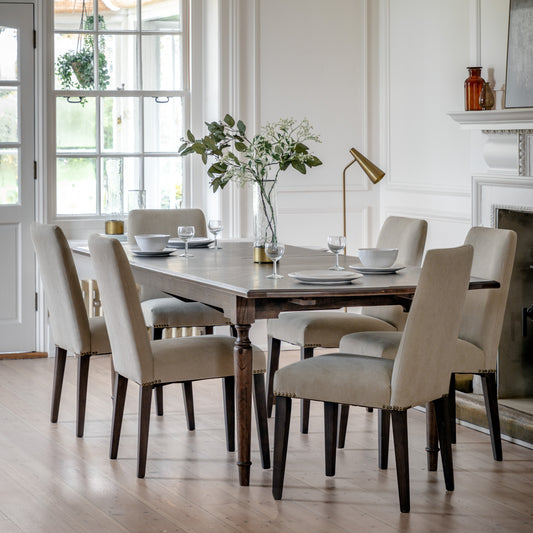

Most people choose a dining table based on how it looks in a showroom photo, then discover later that it either swallows the room or leaves everyone squeezed together. Our dining table range runs from compact round pedestal designs through to large extending tables, so the starting point can genuinely be your room's dimensions rather than a single fixed size everyone has to make work.
An extendable dining table exists for one specific reason: most households don't need maximum seating capacity every single day. A smaller everyday footprint keeps the room feeling proportionate for regular meals, while pulling the table open for a leaf or extension handles the occasional larger gathering without needing a second, bigger table sitting unused most of the year. Several designs in our extending dining tables range offer this in both round and rectangular formats, so the flexibility isn't limited to one shape.
A round dining table changes how a room functions socially, since there's no head of the table and everyone sits at roughly equal distance from each other, which tends to suit a household that values conversation over formal seating hierarchy. It also has a practical side: a round table has no sharp corners to navigate around in a smaller dining space, which can make the room feel less cluttered even at a similar overall footprint to a rectangular equivalent.
Not every home needs to seat eight people regularly, and our small dining tables, including compact round pedestal designs, suit a couple, a smaller family, or a dining area that doubles as part of an open-plan kitchen. These pieces don't compromise on build quality to hit a smaller footprint; they're simply proportioned for a different kind of household rather than being a scaled-down version of a larger table.
At the other end of the range, a large dining table works best in a room built to accommodate it properly, with enough clearance around the edges for chairs to be pulled out fully without hitting a wall or sideboard. These pieces tend to become the genuine focal point of a dining room, particularly in an extending format that can flex between everyday use and hosting a full table of guests.
A dining table earns its keep through daily use far more than through how it photographs, so build quality matters more here than on furniture that sees lighter handling. Every table in this range is built from high-quality materials chosen for durability as much as appearance, which matters given how much a dining table actually endures: hot plates set down without a coaster, chairs scraped back and forth, and the occasional spilled glass. A small dining table sees this wear just as much as a larger one relative to its size, so it's built to the same standard rather than treated as a lesser piece simply because it seats fewer people.
Beyond size and shape, the tone of the tabletop changes how it fits into a room's existing colour scheme. Darker, richer tones tend to suit rooms already built around warm, natural materials and deeper accent colours, while lighter, more contemporary tones work better in a paler, more neutral palette. Since a dining table sits at the centre of the room rather than against a wall, its tone has more visual impact on the space than almost any other piece of furniture in the house, so it's worth checking the specific finish against your existing flooring and chairs before committing to a table.
The single most common mistake in buying a dining table isn't picking the wrong style, it's picking the wrong size for the room. Measure the available floor space with at least 90cm of clearance on all sides for chairs to be pulled out and people to walk past comfortably, then work backwards to a table size and shape that actually fits, rather than falling for a table that looks right in a much larger showroom setting.
This varies by design, so check the fully extended length on the specific product listing before ordering, particularly if your dining room has limited clearance around the table's closed footprint.
Generally yes for the same footprint, since a rectangular shape uses corner space more efficiently, though a round table often feels more sociable for the number it does seat.
Small dining tables are built to the same standard as larger pieces in the range, so they're suited to genuine everyday use, not just occasional dining.
Check the table's dimensions against your doorway and hallway width before ordering, and consider whether the top can be removed from the base for larger pieces if access is tight.
A round table works well with a mix of chair styles since there's no fixed head or foot position dictating a formal set, making it easier to combine chairs from different collections.