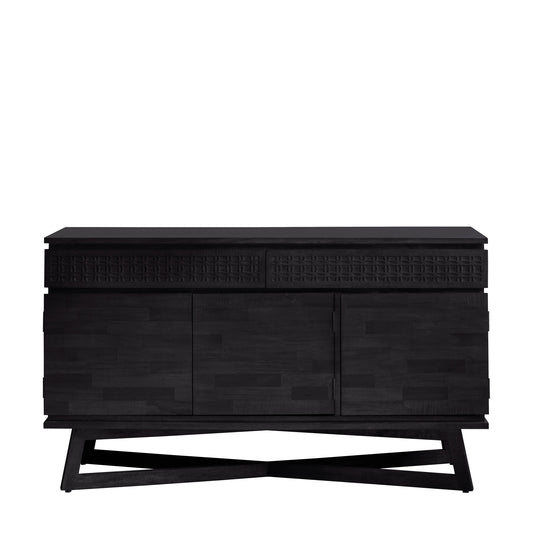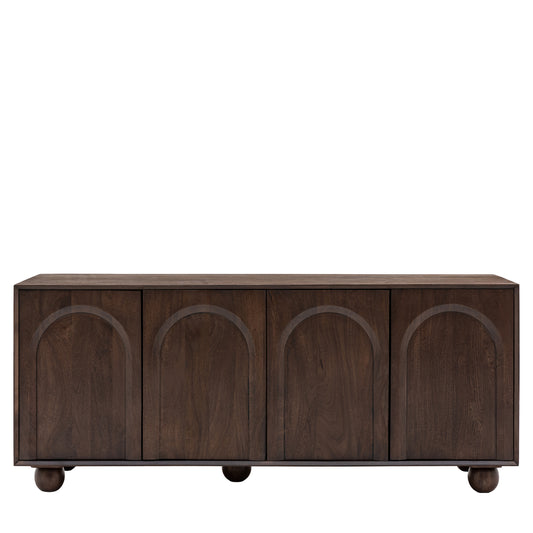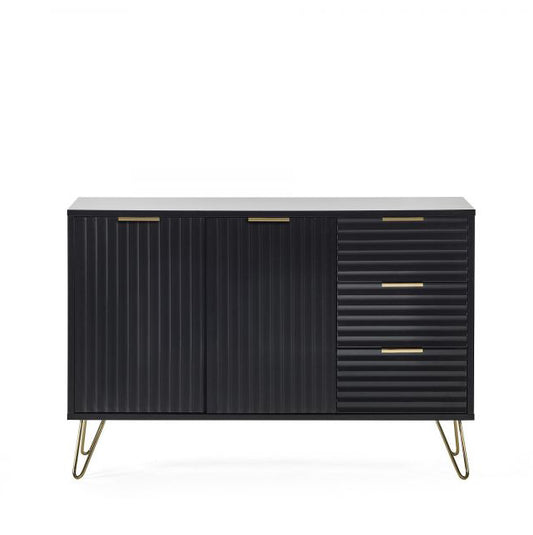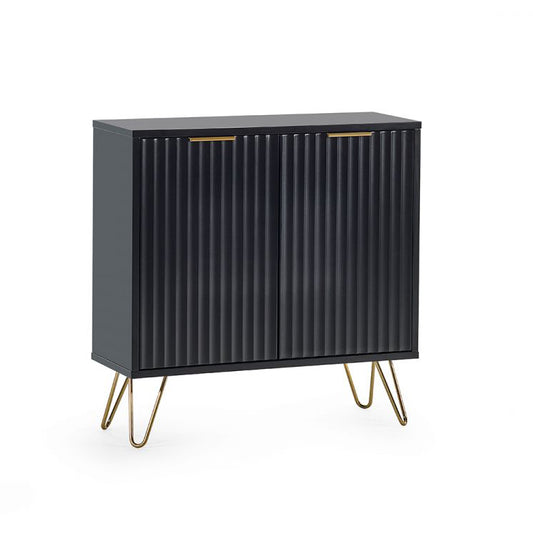

A sideboard has to do more than look good against a wall, since it's usually the piece holding everything a dining or living room needs within reach but out of sight. Our sideboard collection spans compact designs for tighter spaces through to large sideboard cabinet pieces built as a genuine room centrepiece, crafted from a mix of hardwoods and metal detailing rather than a single fixed material.
A small sideboard solves a specific problem: giving proper enclosed storage in a room that can't accommodate a full-sized piece. These compact designs suit a narrower dining room wall, a smaller living room, or a flat where floor space genuinely limits what furniture can go where. Choosing a small sideboard doesn't mean sacrificing build quality, just proportion, so the storage inside is still genuinely useful rather than token.
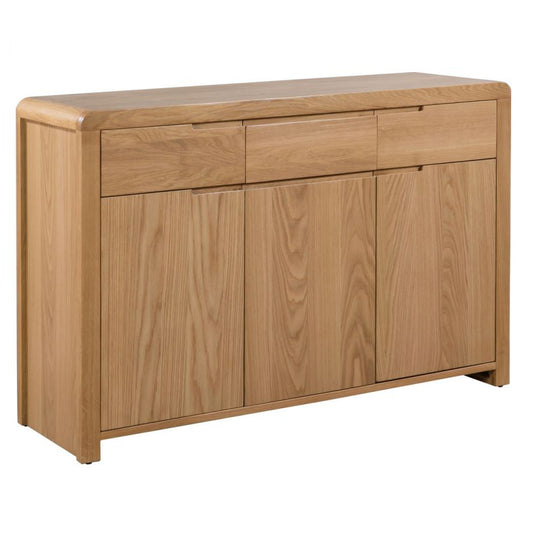
A curved sideboard breaks away from the flat-fronted norm, with a rounded or arc-shaped silhouette that softens a room built around a lot of straight-edged furniture. This shape works particularly well as a standalone statement piece, since the curve draws the eye in a way a plain rectangular front doesn't, making it a strong choice for a room where the sideboard is meant to be noticed rather than blend into the background.
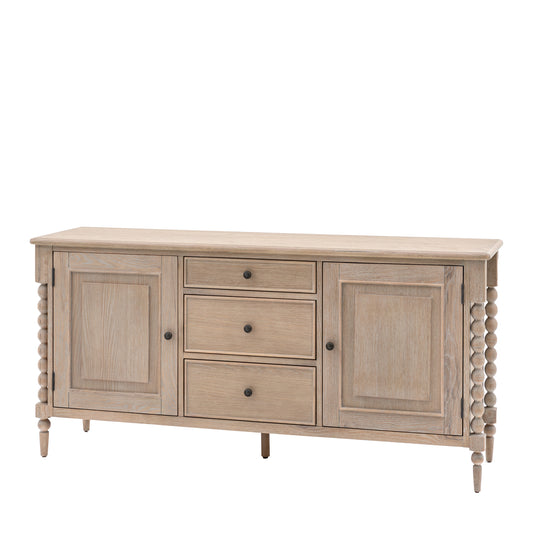
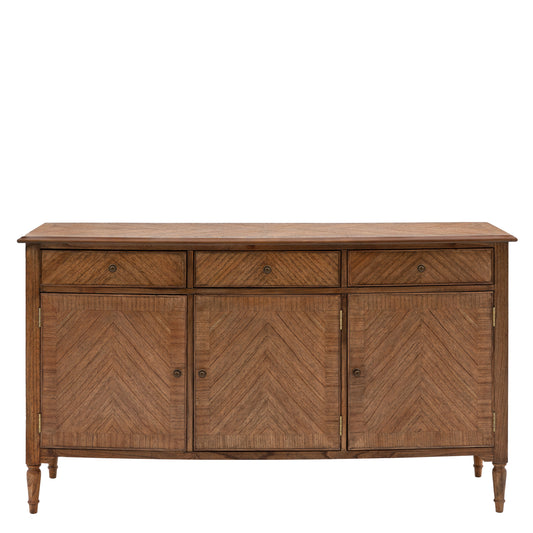
A sideboard with drawers gives more organised, sectioned storage than doors alone, which suits households that want to keep items like napkins, cutlery, or smaller belongings separated rather than piled together behind a single door. Configurations in this range run from a couple of drawers paired with cupboard space through to a fully drawer-led design with several compartments, so the choice comes down to how much of your storage actually needs to be subdivided.
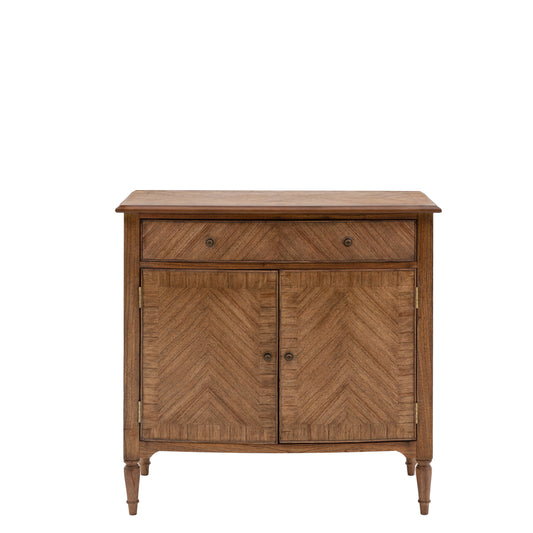
A 2 door sideboard suits a smaller footprint while still giving proper enclosed storage, working well as a straightforward option where a simpler design fits the room better than a larger, more elaborate piece. Large sideboards with three or four doors give considerably more storage and tend to work as the room's main storage solution, particularly in a dining room where crockery, linens, and serving pieces all need a home.
Every sideboard in this range is crafted from a mix of hardwoods and metal detailing, which changes how the piece reads depending on the balance between the two. A wood sideboard with minimal metal hardware leans warmer and more traditional, while designs with more visible metal legs or trim lean toward a modern sideboard aesthetic that suits a room already built around contemporary lines. Since a sideboard sits at a height where its materials are viewed up close, the finish matters more here than on taller furniture glanced at from across the room.
A sideboard living room placement tends to serve a slightly different purpose to one in a dining room, often doubling as a media storage unit or general household storage rather than holding crockery and table linens. This matters when choosing internal configuration, since adjustable shelving suits a living room's mix of item sizes better than fixed drawer compartments designed around cutlery and place settings. Positioning also differs: a living room sideboard often sits opposite seating as a focal point, while a dining room piece more commonly runs along a side wall within easy reach of the table.
A long sideboard makes the most of a wide, uninterrupted wall, spreading storage across a broader footprint rather than building upward. This suits open-plan dining and living spaces particularly well, where a long, low profile keeps sightlines open across the room rather than a tall unit breaking up the space. Sideboards UK buyers choose for this kind of wall often prioritise length over depth, since a shallower, wider piece tends to suit modern open-plan layouts better than a deep, narrow unit that eats further into the floor space.
No, a curved sideboard still sits flush against a flat wall in most cases, since the curve is typically in the door fronts rather than the back panel that meets the wall.
Think about what you're storing day to day; if most items are similar in size and type, fewer larger drawers work fine, while varied smaller items benefit from more, smaller compartments.
Yes, though the internal capacity is naturally less than a large sideboard, so it suits households with more modest storage needs rather than those wanting to store a full dinner service.
It depends on the internal shelving, since a 2 door design with adjustable shelves can hold a similar volume to a drawer-led piece, just organised differently.
It works well in either room, particularly as a media or general storage unit in a living room, so the choice comes down to your storage needs rather than the room type alone.