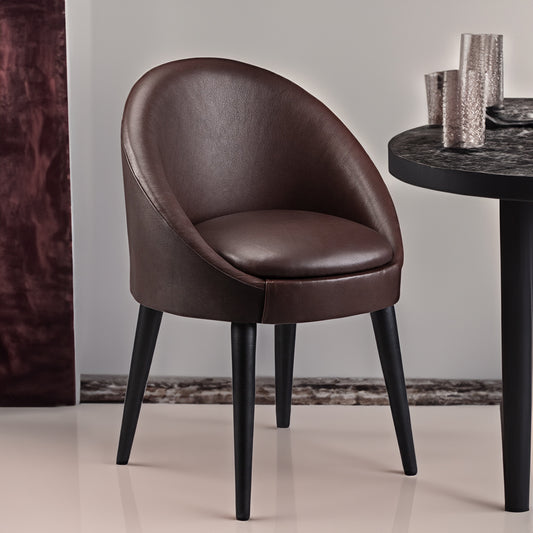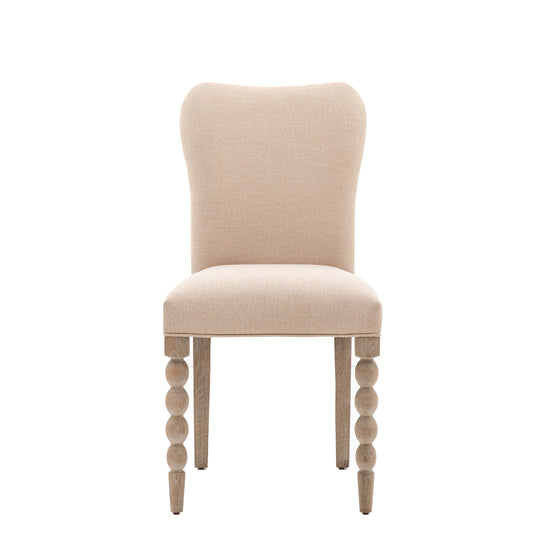

Dining chairs get replaced more often than the table they sit around, usually because they wear out faster or a household's needs change before the table itself does. Our dining chairs collection covers curved back and button back designs, leather and velvet upholstery, and a solid run of black dining chairs, sold as a dining chair set so you're not stuck buying odd numbers to fill out a table.
Dining chairs get replaced more often than the table they sit around, usually because they wear out faster or a household's needs change before the table itself does. Our dining chairs collection covers curved back and button back designs, leather and velvet upholstery, and a solid run of black dining chairs, sold as a dining chair set so you're not stuck buying odd numbers to fill out a table.
The shape of the backrest changes how a chair reads more than almost any other design choice. A curved back dining chair gives a softer, more contemporary silhouette that suits a room already leaning modern, while a button back design brings a more tailored, slightly traditional look through deep stitched detailing across the upholstery. Neither shape is inherently more comfortable than the other; the difference comes down more to how the chair fits the rest of the room than to seating comfort itself.
Leather dining chairs handle daily spills and general wear better than fabric alternatives, which makes them a practical choice for a dining table used regularly by a family. Velvet dining chairs bring texture and a richer colour palette, but need more thought around placement given how visibly velvet marks compared to leather. A linen dining chair sits in between, offering a softer, more relaxed look than leather while generally proving easier to clean than velvet, though it still shows wear differently to a fully synthetic fabric.
Black dining chairs work as a genuine grounding element in a room, particularly around a lighter or more reflective table surface where they add visual weight without competing for attention. This makes them a practical pick for anyone mixing chair styles or updating chairs around an existing table, since black tends to sit comfortably alongside most wood tones and painted finishes already in a dining room.
A dining chair set gives a coordinated look without needing to think about whether individual pieces will match, which suits most households furnishing a dining space from scratch. That said, mixing two chair styles around one table, such as pairing carver-style chairs at each end with a simpler design along the sides, is a genuinely common approach that adds visual interest rather than looking mismatched, provided the seat heights and general proportions stay consistent.
Dining table chairs need to work with the table's height and style as much as with each other, so measure your table's height and under-table clearance before ordering new chairs, particularly if you're replacing chairs on an existing table rather than buying both together. A chair that's slightly too tall or too low relative to the table can throw off the whole room even if the chair itself looks right in isolation.
Upholstered dining chairs make a genuine difference to comfort over a longer meal compared to a fully hard wooden or metal seat, since the padding softens pressure points that build up after twenty or thirty minutes of sitting. This matters more than people often expect when choosing chairs for the dining table specifically, as opposed to occasional seating elsewhere in the home, since a dining chair typically sees more sustained sitting time per use than most other chairs in the house. Checking the density and depth of the padding, not just the fabric on top, gives a better sense of how a chair will actually feel after the first few uses rather than just on the showroom floor.
Dining chairs uk shoppers buy need to suit typical British dining room proportions, which tend to run smaller than equivalent spaces in some other markets, particularly in older housing stock with more compact reception rooms. This is part of why chairs sold in pairs or small sets, rather than only as large matching collections, make practical sense: a household extending an existing table for guests often needs two or four additional chairs rather than committing to a completely new set. Whether you are furnishing a first dining room or replacing worn chairs around a table you already own, buying in manageable numbers keeps the process proportionate to the actual space and need.
Most designs in this range are sold as a dining chair set rather than individually, so check the specific listing if you need an odd number or a single replacement chair.
Support varies by specific design rather than shape alone, so check the seat and backrest angle on a particular chair if lower back support is a priority for regular, longer meals.
This depends more on the material than the colour itself; leather and painted wood finishes in black can show light scuffs, though these are often less visible than marks on a paler fabric chair.
Yes, this is a common and intentional design choice, provided the seat height and general scale of both styles stay reasonably consistent so the table doesn't look mismatched.
Measure the clearance between your table's underside and the floor, then compare it against the dining chair's arm height if applicable, since arms can prevent a chair from tucking in fully.